 EN
EN


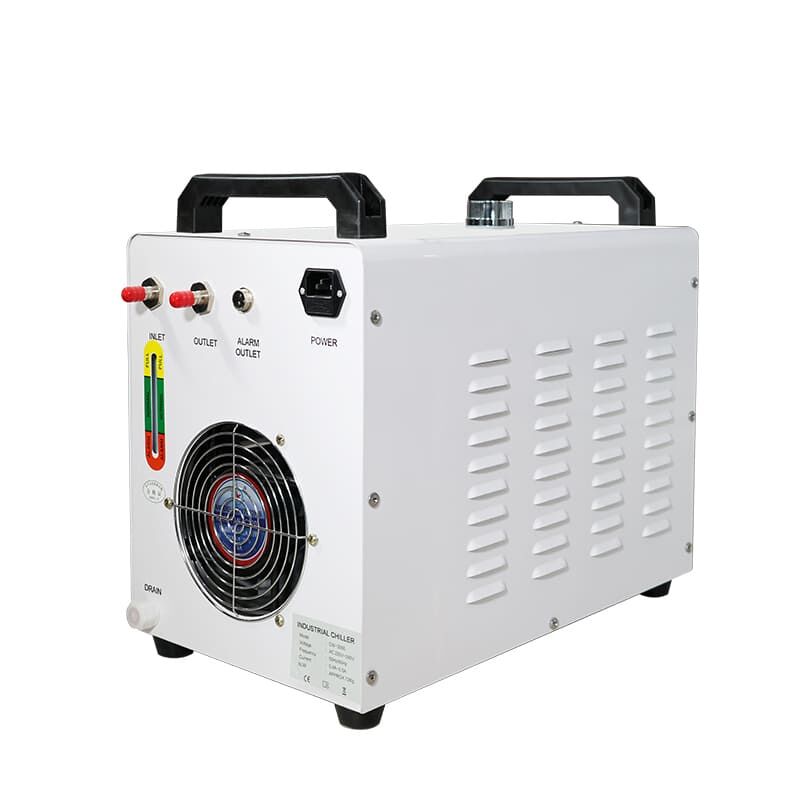
What Makes a Mini Industrial Chiller Ideal for Lasers?
Mini industrial chillers pack a lot of cooling power into their small size, which makes them really good for use with laser systems. These chillers take up about 30 to 50 percent less space compared to regular ones, so they fit right into tight workshop areas without messing up the temperature stability needed for proper operation. Big chillers tend to turn on and off all over the place, but the mini versions keep things steady around plus or minus half a degree Celsius. That kind of stability matters a lot when working on delicate operations such as engraving metals or doing fine welds where even tiny temperature changes can throw off the whole process.
The Role of Temperature Regulation in Precision Laser Work
Research published in the International Journal of Advanced Manufacturing Technology back in 2023 showed something interesting about CO2 laser cutters. When these machines run hotter than they should, the kerf variations get about 18% deeper and edge quality drops by around 12%. That's where mini industrial chillers come into play. These cooling systems actually pull excess heat away from the laser tubes and those delicate optical parts. The difference matters a lot, especially for fiber lasers doing metal marking work. Without proper cooling, lenses tend to fog up inside, which messes with the beam path. We've seen this happen before in aerospace manufacturing, where important serial numbers end up looking blurry instead of crisp and clear. Maintaining stable temperatures just makes sense for precision work.
Preventing Overheating to Extend Laser Machine Lifespan
Unmanaged thermal loads can reduce laser diode lifespans by 40–60%, according to Ponemon Institute’s 2023 analysis of equipment failures. Mini chillers mitigate three key overheating risks:
- Resonator Degradation: Maintains crystal temperatures below 35°C in Nd:YAG lasers
- Power Supply Protection: Reduces capacitor aging rates by 75% compared to passive cooling
- Optics Preservation: Prevents thermal warping in galvanometer mirrors critical for beam positioning
Cooling Needs for CO2 and Fiber Laser Systems Explained
CO2 Laser Cooling Requirements: Ensuring Stability and Precision
CO2 lasers require strict thermal stability, needing cooling systems that maintain water temperatures within ±0.5°C. These lasers generate up to 70% waste heat, demanding high-capacity chillers to prevent wavelength drift and beam divergence. Research shows improper cooling reduces cutting accuracy by 38% in CO2 laser engraving applications.
Fiber Laser Cooling Needs: Handling High-Energy Density Output
Fiber lasers operate at 10–25% higher energy density than CO2 systems, creating localized heat spikes that require rapid cooling. A mini industrial chiller must deliver 4–6°C coolant to optical components while managing heat loads exceeding 3 kW/m². Precision-cooled fiber lasers maintain 99.2% beam consistency during extended 12-hour welding operations.
Case Study: Enhanced Engraving Accuracy with Optimized Cooling
A manufacturing facility upgraded its 60W CO2 lasers to compressor-based mini chillers, achieving:
- 30% reduction in edge roughness on acrylic engravings
- 22% longer diode lifetimes
- 15% faster job completion due to consistent beam focus
The system maintained a 0.4°C variance during continuous operation, demonstrating how stable cooling directly enhances output quality and operational efficiency.
Key Features of High-Performance Mini Compressor-Based Chillers
Why Compressor-Based Mini Industrial Chillers Lead the Market
According to the Refrigeration Technology Report from 2023, compressor based systems make up about 82 percent of all industrial laser cooling applications because they just work better when it comes to moving heat around. Thermoelectric models can't match this performance level. These compressors keep temperatures stable within plus or minus half a degree Celsius even after running nonstop for 12 hours straight. That kind of stability really matters since any significant temperature fluctuations would cause problems with laser wavelengths drifting out of alignment. The scroll compressor design itself gives these systems roughly 35% better energy efficiency compared to older reciprocating models. Plus, when paired with R134a refrigerant, these compact units under 24 inches wide can reject as much as 3,500 BTUs per hour worth of heat. Pretty impressive for something so small.
Compact Design: Balancing Cooling Power and Space Efficiency
Modern mini chillers deliver 40% more cooling capacity per cubic foot than 2019 models (Manufacturing Efficiency Study 2024), thanks to stacked plate heat exchangers and microchannel condensers. Units like the CW-5200 series provide 1.5kW cooling in an 18"×14" footprint—small enough to mount directly on laser cutting beds without disrupting workflow.
Energy Efficiency and Low Noise Levels in Modern Chiller Models
Variable-speed compressors and EC fan motors reduce power consumption by 30% compared to fixed-speed units (2024 Industrial Cooling Analysis), with noise levels under 55 dB at 1m. Smart sleep modes lower energy use during idle periods, while corrosion-resistant evaporators eliminate 92% of maintenance-related downtime in humid environments.
How to Choose the Best Mini Industrial Chiller for Your Laser System
Matching Chiller Capacity to Laser Wattage (30W–100W)
Getting the cooling capacity right makes all the difference for performance and efficiency. Lasers rated between 30W to 50W generally work best with chillers around 420W to 500W. When dealing with 60W to 80W systems, look for units in the 550W to 600W range. For those high power 90W to 100W lasers, nothing less than 650W to 750W chillers will handle the heat properly. Most industry experts agree that matching these numbers matters a lot because otherwise the system starts cutting back on power when it gets too hot, which nobody wants during actual operations.
Understanding Duty Cycle Requirements for Continuous Operation
Assess your laser’s operational intensity—intermittent use (30–50% duty cycle) allows for smaller chillers, while continuous 24/7 workflows demand industrial-grade units rated for 80–100% duty cycles. High-duty applications benefit from dual-compressor designs that distribute load and extend component life.
Smart Sensors and IoT Integration Trends in Laser Chiller Systems
Modern chillers equipped with IoT-enabled sensors offer real-time thermal analytics, enabling predictive maintenance and reducing unplanned downtime by up to 30%. These systems automatically adjust cooling parameters in response to laser output fluctuations, maintaining consistent performance across variable workloads.
Real-World Impact: Productivity Gains After Upgrading Your Chiller
Facilities that upgraded to precision-matched chillers reported 15–20% faster job completion times and 40% longer laser tube lifespans, according to 2023 operational data from industrial manufacturing sites.
FAQ
What is the main advantage of using mini industrial chillers for laser systems?
Mini industrial chillers provide consistent and stable cooling which is crucial for precision work, such as engraving or welding, and they have a compact design that fits into limited spaces without compromising on performance.
How do mini industrial chillers extend the lifespan of laser machines?
By managing thermal loads effectively, they mitigate risks such as resonator degradation, power supply wear, and optic impairment, reducing chances of overheating and extending component lifespans.
Are compressor-based mini chillers more efficient than thermoelectric models?
Yes, compressor-based chillers offer better temperature stability and energy efficiency, making them preferable for industrial applications where precision is crucial.
What should I consider when choosing a mini industrial chiller for my laser system?
Consider the wattage of your laser, its duty cycle requirements, and whether an air-cooled or water-cooled system is more suitable for your application environment.
Table of Contents
- What Makes a Mini Industrial Chiller Ideal for Lasers?
- The Role of Temperature Regulation in Precision Laser Work
- Preventing Overheating to Extend Laser Machine Lifespan
- Cooling Needs for CO2 and Fiber Laser Systems Explained
- Key Features of High-Performance Mini Compressor-Based Chillers
- How to Choose the Best Mini Industrial Chiller for Your Laser System
-
FAQ
- What is the main advantage of using mini industrial chillers for laser systems?
- How do mini industrial chillers extend the lifespan of laser machines?
- Are compressor-based mini chillers more efficient than thermoelectric models?
- What should I consider when choosing a mini industrial chiller for my laser system?