 EN
EN


Why Precise Temperature Control (10–15°C) Is Critical for Therapeutic Efficacy
The Physiological Threshold: How 10–15°C Optimizes Recovery Without Risking Cold Shock
Cold therapy works best when it causes blood vessels to constrict and lowers inflammation without stressing the body too much. Going below 10 degrees Celsius can lead to cold shock problems like sudden heart rate increases or even hypothermia. On the flip side, anything above 15 degrees starts to lose those helpful anti-inflammatory effects. Studies point to around 12 degrees as the sweet spot for recovery benefits, with muscles healing about 38 percent quicker compared to just resting normally. At this temperature range, the body activates special proteins such as RBM3 which help protect cells during the process. Finding this balance between effectiveness and safety matters a lot, particularly for people who have heart issues or other medical conditions to consider before trying cold immersion therapies.
Real-World Stability Challenges: Ambient Heat Load, Tub Insulation, and Dynamic User Heat Transfer
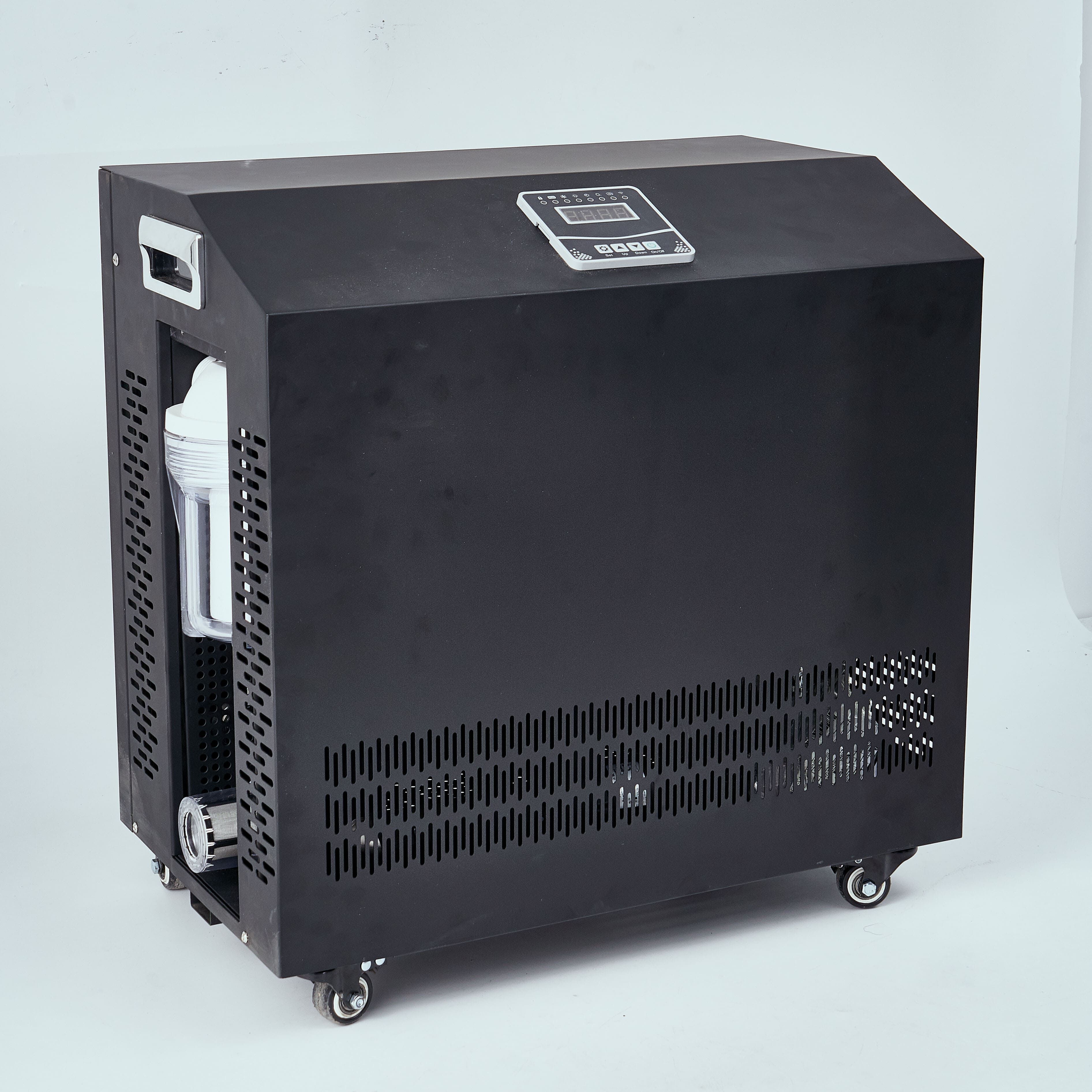
Maintaining 10–15°C demands overcoming ambient heat ingress (up to 500 W/hour in 25°C rooms), inadequate insulation (20–40% heat loss), and user body heat transfer (adding 1–3°C during immersion). Standard bathtubs lose 0.5°C/minute without active chilling support. A robust Water Chiller must counteract these variables through:
- Continuous heat extraction (matching 1,200 BTU/h heat gain)
- Dynamic sensor adjustments responding to thermal load shifts
- Sealed insulation minimizing ambient interference
Failure to address these factors causes temperature drift (2°C fluctuations), reducing therapeutic consistency by up to 60% (Journal of Sports Medicine, 2023).
Sizing Your Water Chiller for Bathtub Volume and Target Cooling Performance
Matching BTU/h and HP (0.5–1.5 HP) to Water Capacity (150–400 L) and ΔT Requirements
Getting the right size water chiller means finding the sweet spot between how much cooling power we need (measured in BTUs per hour) and what our bathtub actually requires in terms of volume and temperature change. Let's take a standard 200 liter tub that needs to drop 10 degrees Celsius from room temperature as an example. The calculation goes like this: multiply the volume in liters by the temperature difference in degrees Celsius, then multiply that result by 3.96 to get the required BTUs per hour. When we do the math on our example, it comes out to around 7,920 BTUs for a cooldown period lasting about two hours. Now, since one horsepower is roughly equivalent to 9,000 BTUs per hour, something just under a full horsepower should work fine for most situations. But wait! Real life throws curveballs. Things like insulation quality, ambient temperatures, and how efficiently heat transfers can all throw off these numbers. Most installers recommend adding an extra 20 to 25 percent capacity buffer to account for these unpredictable factors.
| Volume | ΔT | Min. HP | Recommended HP |
|---|---|---|---|
| 150 L | 10°C | 0.5 HP | 0.6–0.75 HP |
| 300 L | 15°C | 1.0 HP | 1.2–1.3 HP |
| 400 L | 15°C | 1.3 HP | 1.5 HP |
Undersized units prolong cooling cycles and accelerate component failure, while oversized chillers waste energy through short-cycling. Insulation quality and ambient heat further influence requirements—uninsulated tubs in warm climates may need 40% more capacity than standard calculations suggest.
Static vs. Circulating Systems: Why Flow Rate and Pump Integration Dictate Effective Cooling
Static (non-circulating) systems create thermal stratification where chilled water accumulates locally but fails to uniformly cool the bath. Circulating systems prevent this imbalance by maintaining flow rates of 20–40 L/min through integrated pumps. This flow rate directly impacts heat exchange efficiency:
- Low flow (<15 L/min) risks ice formation in evaporators
- High flow (50 L/min) reduces thermal transfer dwell time
Properly sized pumps maintain turbulent flow around the chiller's heat exchanger, enabling 30–50% faster temperature stabilization compared to static setups. This consistent thermal management is critical for maintaining therapeutic 10–15°C temperatures during extended immersion.
Safe and Sanitary Integration: Water Chiller Compatibility with Pumps, Filtration, and Disinfection
Mitigating Biofilm Risk: Why Stagnant Chilled Water Demands Dual-Loop or On-Demand Circulation
When water sits still in cold therapy systems, it becomes a breeding ground for biofilms – those pesky bacterial layers that stick to surfaces and mess with both cleanliness and equipment lifespan. These biofilms aren't just annoying; they can cut down heat transfer efficiency by around 40%, plus eat away at pumps and chillers over time. The numbers tell a story too: facilities across the country are losing roughly $740,000 each year to biofilm problems according to a recent study from the Ponemon Institute. To combat this issue, many installations now use dual-loop systems where the actual water chiller stays separate from the bath water thanks to a heat exchanger barrier. This stops all sorts of gunk from getting into sensitive parts. Another approach gaining traction is on-demand circulation which keeps things moving constantly so microbes don't get a chance to settle in place. Both options meet requirements set forth by NSF/ANSI 50 standards for proper water treatment equipment sanitation. While filters definitely play their part in catching particles before they cause trouble, maintaining continuous flow remains absolutely crucial when fighting back against biofilm buildup in these systems.
Air-Cooled vs. Heat Pump Water Chillers: Choosing for Efficiency, Noise, and Climate Resilience
COP Trade-offs: When Air-Cooled Units Outperform Heat Pump Water Chillers Below 10°C Ambient
The Coefficient of Performance, or COP, basically measures how efficiently something cools down stuff. Heat pump water chillers tend to struggle when temperatures drop below around 10 degrees Celsius outside. When it gets really cold out there, these systems just can't pull enough heat from the environment anymore, which cuts their COP performance somewhere between 25 to 30 percent according to industry reports from last year. Air cooled units handle this problem much better since they don't rely on pulling heat from the surrounding air. Instead they reject heat directly into the atmosphere, so their COP stays pretty close to what manufacturers claim on spec sheets. Bathtub cold therapy applications need consistent temperature control for proper treatment effects. Given these requirements, air cooled water chillers make sense especially in locations where winters get quite chilly.
FAQ
Why is precise temperature control important in cold therapy?
Precise temperature control, specifically between 10–15°C, is crucial because it ensures optimal therapeutic benefits such as quicker muscle recovery and reduced inflammation while preventing adverse effects like cold shock or hypothermia.
What role does a water chiller play in cold therapy?
A water chiller is key in maintaining the desired temperature range by extracting heat continuously, making use of dynamic sensors, and minimizing ambient interference to ensure consistent therapeutic results.
How do I determine the right water chiller size for my bathtub?
The appropriate size depends on the volume of your bathtub and the desired temperature change. Calculating the required BTU/h and matching it with horsepower helps in choosing a chiller that compensates for insulation quality and ambient conditions.
What is the difference between static and circulating cooling systems?
Static systems can lead to temperature imbalances and inefficiencies, whereas circulating systems maintain consistent flow rates that enhance even heat distribution, significantly improving the efficacy of cold therapies.
How can biofilm formation in water chillers be prevented?
Integrating dual-loop systems and on-demand circulation can mitigate biofilm risks by ensuring continuous water movement, which helps maintain cleanliness and equipment lifespan.
Table of Contents
- Why Precise Temperature Control (10–15°C) Is Critical for Therapeutic Efficacy
- Sizing Your Water Chiller for Bathtub Volume and Target Cooling Performance
- Safe and Sanitary Integration: Water Chiller Compatibility with Pumps, Filtration, and Disinfection
- Air-Cooled vs. Heat Pump Water Chillers: Choosing for Efficiency, Noise, and Climate Resilience
-
FAQ
- Why is precise temperature control important in cold therapy?
- What role does a water chiller play in cold therapy?
- How do I determine the right water chiller size for my bathtub?
- What is the difference between static and circulating cooling systems?
- How can biofilm formation in water chillers be prevented?