 EN
EN


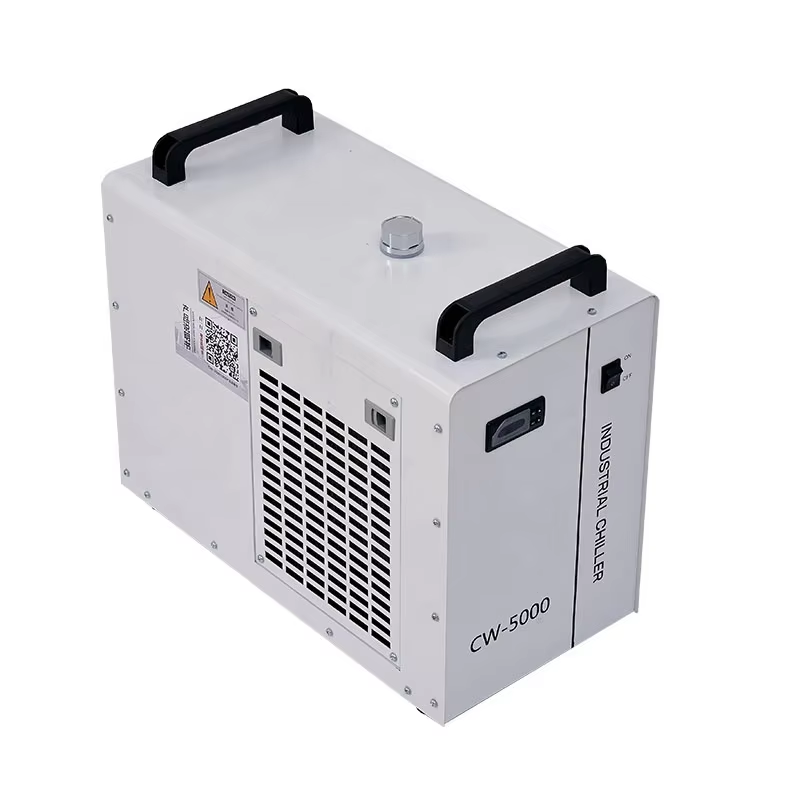
CW Series Chiller: Determine Cooling Capacity Based on Laser Power and Heat Load
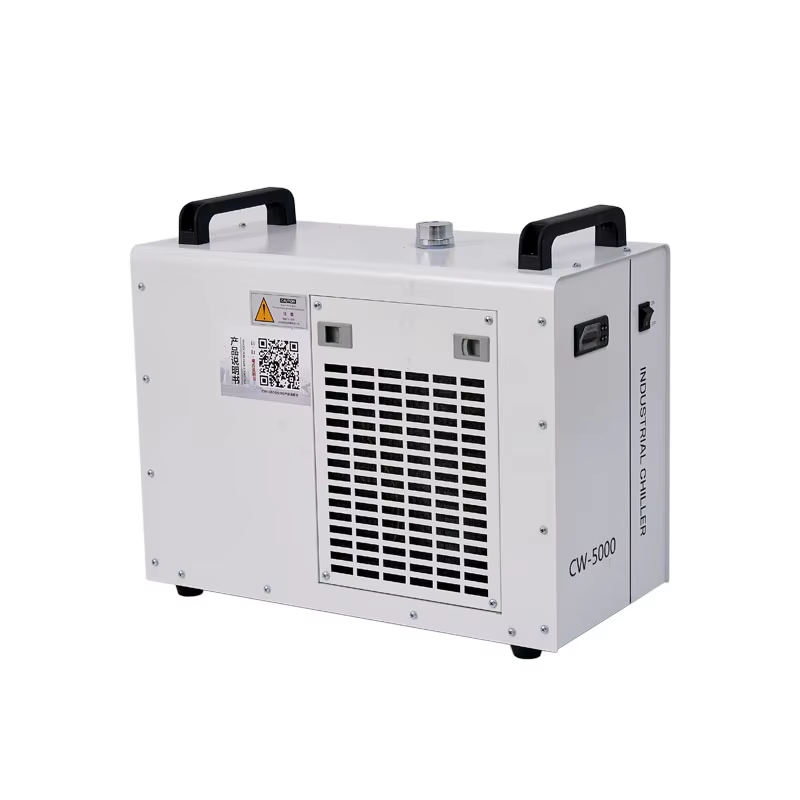
Matching CW Series Chiller Capacity to Laser Power Ratings
When picking out a CW Series Chiller, it needs to match up pretty closely with what kind of power output the laser actually puts out. The general rule of thumb is that the cooling capacity has to be somewhere between 1.2 and 1.5 times bigger than whatever power rating the laser comes with. Take a look at something like a 1500 watt laser system for example. That means getting hold of a chiller that can handle at least 1800 watts worth of cooling. Why? Well, this extra capacity helps deal with those pesky changes in room temperature and keeps things from overheating around important parts like laser tubes and power supply units. Getting this wrong can lead to all sorts of problems down the road. Some studies have found that not having enough cooling power might cut the life span of laser diodes by as much as 60 percent according to findings published in the Journal of Laser Applications back in 2023.
Calculating Heat Dissipation Needs for Continuous Laser Operation
To accurately determine heat load, use the formula:
Q = m × Cp × ΔT
Where:
- Q = Heat load (BTU/hr)
- m = Coolant flow rate (lb/hr)
- Cp = Specific heat of coolant
- ΔT = Temperature differential (°F)
Account for all heat sources, including laser generators, optics, and auxiliary systems. Continuous-duty lasers produce about 30% more heat than intermittent-use systems, requiring an additional 10–20% safety margin in chiller capacity. Modern CW Series Chillers feature real-time monitoring to maintain thermal balance, ensuring stable performance under peak loads.
Ensure Temperature Stability to Protect Beam Quality and Laser Components
Precise temperature control is essential for maintaining laser performance. Even minor thermal fluctuations can degrade beam quality and accelerate component wear. Variations beyond ±0.5°C may cause wavelength drift and beam distortion, reducing cutting accuracy by up to 0.1 mm–unacceptable in high-precision applications.
How precise temperature control preserves laser wavelength and beam consistency
Keeping things at stable temperatures matters a lot when it comes to maintaining proper laser wavelengths. When there's thermal movement, it changes how light bends through optical components, which causes problems with where the laser focuses and how evenly the energy spreads out. Just think about what happens with something as small as a 1 degree Celsius shift in temperature – that kind of fluctuation can make a CO2 laser lose around 5% of its power because the beam starts to spread out too much. The CW Series Chiller manages to keep temperatures within plus or minus 0.1 degrees Celsius thanks to its PID control system. This helps keep those important wavelength settings just right and stops the laser from drifting off target. For applications like micro machining or creating patterns on semiconductors, this sort of precision really counts since these processes need accuracy down to the micron level.
Preventing overheating in laser tubes and critical optics with CW Series Chiller
Too much heat causes serious problems for laser tubes and their optical components. When things get too hot, ceramic nozzles crack, mirrors become warped, and overall efficiency drops somewhere between 15% to 20% each year. For those working with RF excited lasers specifically, anything over 35 degrees Celsius really speeds up how fast electrodes wear down. That's where the CW Series Chiller comes into play. This system tackles all these heating problems through smart cooling technology that adapts as conditions change. What makes it work so well? A dual loop setup keeps delicate optics protected from temperature fluctuations in the surrounding environment. As a result, laser tubes last about two to three extra years compared to standard setups, plus there's no more dealing with annoying thermal lensing issues when aligning collimating systems.
Evaluate Advanced Features of CW Series Chiller Technology
Modern laser applications require intelligent, precision cooling solutions. The CW Series Chiller integrates advanced thermal management technologies to optimize efficiency and protect critical components.
DC inverter technology for energy-efficient and stable temperature regulation
The DC inverter compressors can change how much cooling they produce depending on what the system actually needs at any given moment. This means these systems typically save around 40% in energy costs when compared to older models that just run at full speed all the time. The way these compressors work keeps temperatures really stable within about half a degree Celsius, which is super important for keeping laser wavelengths accurate over long periods of operation. Since the compressor doesn't keep turning on and off constantly like traditional units do, there's less strain on the electrical system and fewer moving parts wearing out. Manufacturers have noticed this leads to longer lasting equipment and better performance consistency in their laser systems across different operating conditions.
Integrated flow monitoring and alarm systems for real-time safety alerts
Built-in sensors continuously monitor coolant flow and pressure, detecting issues like blockages or pump failure. When anomalies occur, visual and audible alarms activate alongside automated shutdown protocols to prevent overheating. This real-time diagnostics capability enables proactive maintenance, minimizing downtime and repair costs in high-precision manufacturing settings.
Assess Environmental and Installation Compatibility
Choosing between air-cooled and water-cooled CW Series Chiller systems
When deciding between air cooled and water cooled models, facility layout and local climate play a big role. Air cooled systems are easier to install since there's no need for water pipes, which makes them good choices for small spaces or places where water isn't readily available. The downside? They tend to generate more heat waste and might struggle when temperatures climb past around 35 degrees Celsius or 95 Fahrenheit. Water cooled chillers work better thermally in tight spots, but facilities need either cooling towers or some kind of recirculation system to make them function properly. Industries that need very precise temperature control within plus or minus half a degree Celsius often find that water cooled CW Series units maintain stability longer over time, even though these systems come with bigger upfront expenses for installation.
Considering ambient conditions, space, and noise levels in chiller placement
Proper placement is critical for optimal performance and equipment life. Key considerations include:
- Ambient temperature: Maintain an operating range of 10–30°C (50–86°F) to avoid condensation or overheating
- Clearance space: Provide at least 50 cm of perimeter clearance for airflow and service access
- Acoustic levels: Position away from sensitive areas, as compressors emit 65–75 dB during peak cycles
- Vibration isolation: Use anti-vibration pads if floor stability is inadequate, especially in interferometry setups
In multi-laser facilities, centralized cooling locations help minimize ductwork while ensuring effective ventilation. In noise-sensitive environments like medical labs, acoustic enclosures may be necessary–increasing footprint by 15–20%.
Frequently Asked Questions (FAQ)
What cooling capacity should I choose for my laser?
The cooling capacity of the chiller should be between 1.2 and 1.5 times the power rating of your laser to handle variations in room temperature and prevent overheating of critical components.
What formula is used to determine heat load for continuous laser operations?
The formula is Q = m × Cp × ΔT, where Q is heat load, m is coolant flow rate, Cp is the specific heat of coolant, and ΔT is temperature differential.
How does temperature stability affect laser performance?
Maintaining precise temperature control keeps laser wavelengths consistent, prevents beam distortion and degradation, and avoids reducing cutting accuracy in high-precision applications.
What is the advantage of using DC inverter technology?
DC inverter compressors adjust cooling output based on system needs, saving energy, reducing strain on electrical systems, and prolonging equipment life.
Should I choose an air-cooled or water-cooled chiller?
The choice between air-cooled and water-cooled chillers depends on facility layout, climate conditions, installation space, and required temperature stability for specific applications.