 EN
EN


Why Thermal Load Exceeds Rated Power: Accounting for Diode Efficiency, Splice Losses, and Cabinet Heat
Most fiber laser systems manage to turn around 30 to 40 percent of their electrical input into actual usable light, leaving the remaining portion wasted as heat according to Laser Systems Report from 2023. What this means in practice is that the thermal burden often ends up being about 1.2 to 1.5 times what the laser is actually rated for output. Why? Well there are basically three main culprits behind this situation. First off, those diodes themselves aren't very efficient at all, wasting somewhere between 40 and 50% of the energy they receive. Then we have these optical connections which lose another 3 to 5% each time they connect parts together. And finally, don't forget about all those supporting components like power supplies and control units that also contribute their share of heat generation. Take a look at something like a standard 1.5 kW laser system for example. Such equipment can actually produce as much as 2.25 kW worth of heat, which explains why proper cooling solutions become absolutely essential. Without adequate thermal management, problems like wavelength shifts happen or worse yet, the diodes might fail prematurely before their expected lifespan even arrives.
Ensuring Beam Quality Through Precision Temperature Control
How ±0.3°C Stability Prevents Thermal Lensing and Beam Parameter Product (BPP) Degradation
Keeping temperatures stable within a ±0.3°C window matters a lot when it comes to maintaining good beam quality in those high power fiber lasers we work with daily. When temps go outside this range, thermal gradients start forming across optical components. These gradients cause lensing effects that mess up the beam path and can actually increase the Beam Parameter Product (BPP) by as much as 30%. As anyone who's dealt with laser cutting knows, higher BPP means bigger spot sizes and lower energy concentration at the cut point, which naturally affects how accurate our cuts end up being. Look at aerospace machining specifically – they need kerf widths under 20 microns as standard practice. Any thermal drift in these applications results in wasted materials and unexpected production stops. That's why active cooling systems are so important. They help fight off the heat generated from diode inefficiencies and those pesky splice losses, both of which contribute significantly to thermal instability problems.
Flow Rate, Pressure, and Coolant Compatibility: Aligning Fiber Laser Chiller Output with OEM Head Requirements
Getting the right chiller for a laser system means matching it exactly to what the OEM specifies for hydraulics. When dealing with 6 kW lasers specifically, anything under 8 to 10 liters per minute flow rate tends to create hot spots in those delicate gain fibers. On the flip side, if pressure goes over 6 bar, there's a good chance those laser head seals will start leaking. What about the coolant itself? That matters too. Most folks find that mixing ethylene glycol at around 30% works best because it stops microbes from growing without making the fluid too thick. Keeping the pH somewhere between 7.0 and 8.5 also helps avoid corrosion problems down the road. Big name manufacturers usually run their chillers through 2,000 hours of accelerated testing before releasing them. Take the ZIBO LIZHIYUAN M-series for example these have been proven to work with IP54 rated heads. Don't forget to cross reference chiller performance curves against actual laser specs either. Even minor differences in flow rates, sometimes just 3%, can actually reduce beam quality by as much as 15% in practice.
Air-Cooled vs Water-Cooled Fiber Laser Chillers: Power-Driven Selection Criteria
When Air-Cooled Fiber Laser Chillers Are Viable (<3 kW) – and When They Risk Instability or Premature Failure
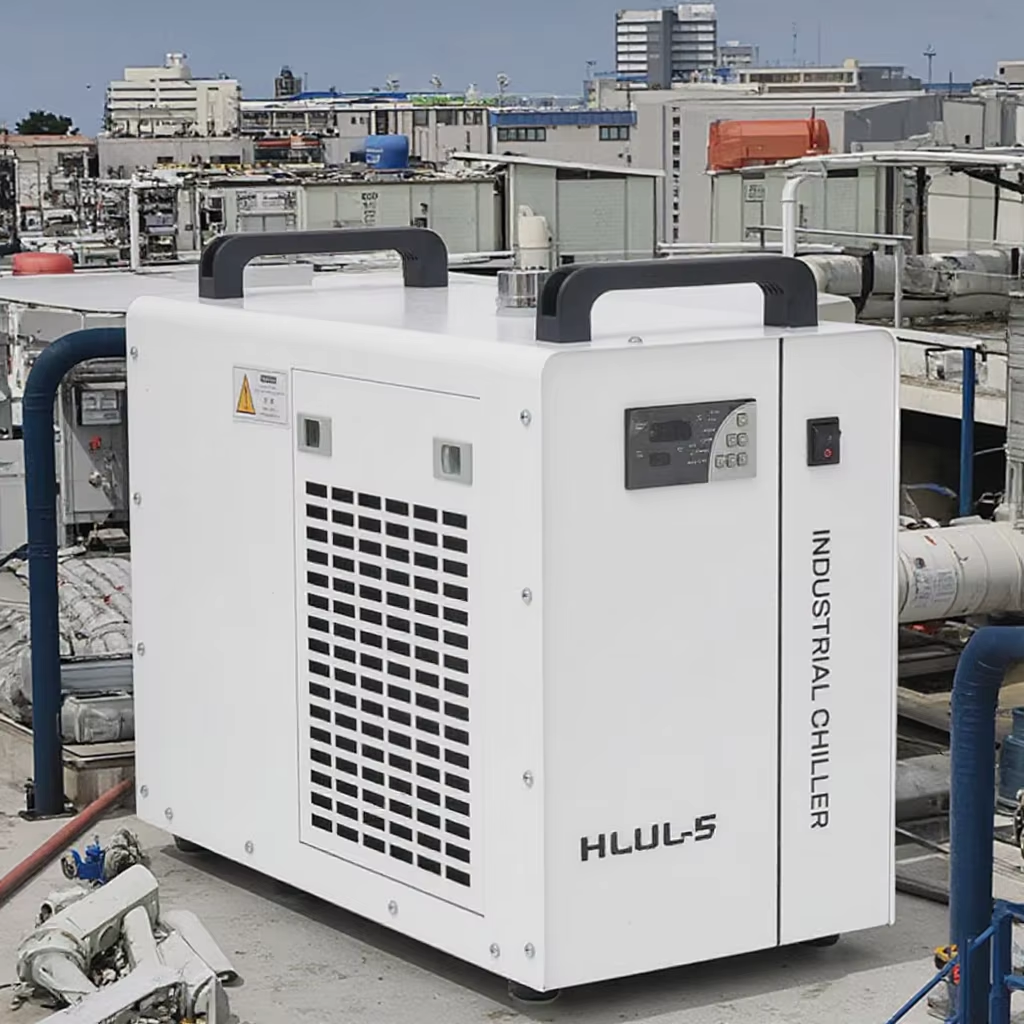
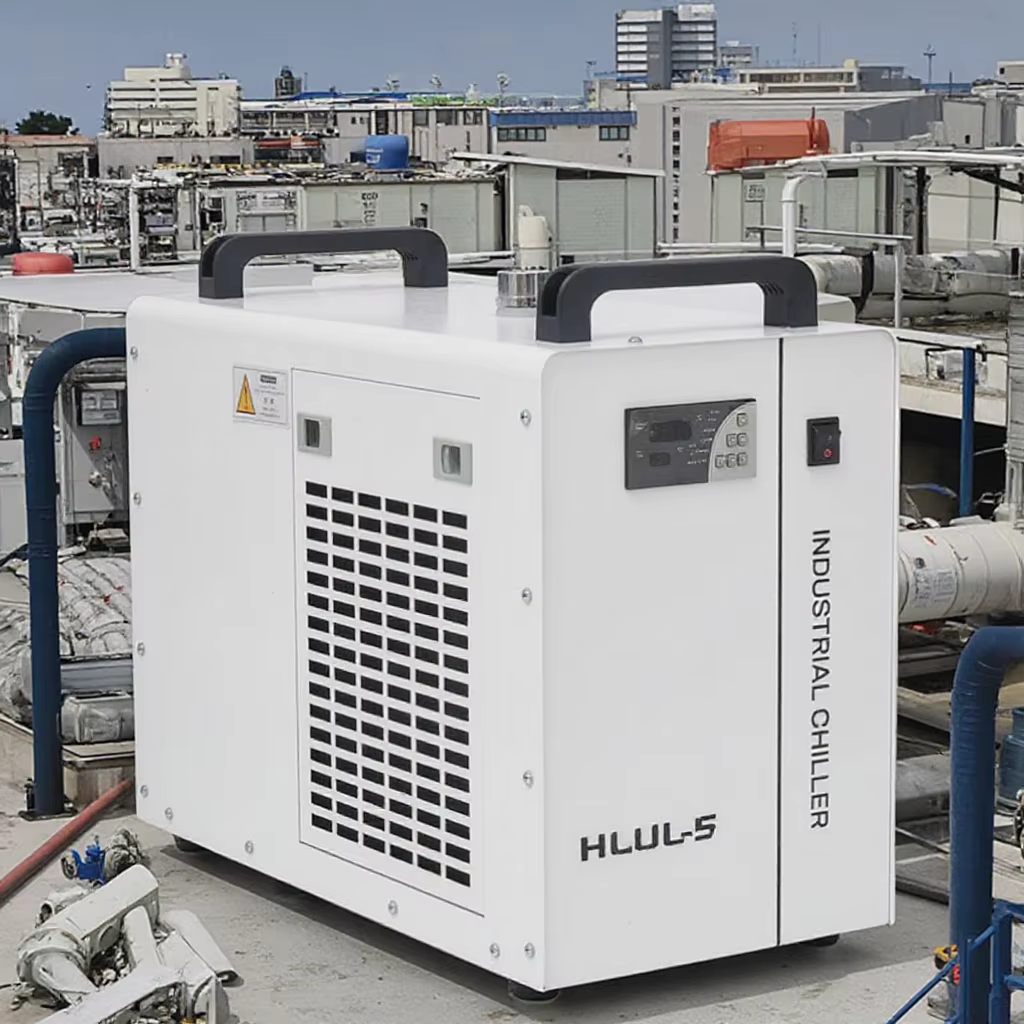
Air-cooled fiber laser chillers provide a cost-effective, low-maintenance solution for systems up to 3 kW. Using fan-driven condensers, they eliminate water usage and simplify installation–ideal for space-constrained or portable setups. Benefits include:
- 40–50% lower initial cost compared to water-cooled units
- No plumbing requirements or water consumption
- Easy deployment across multiple machines
However, their heat dissipation capacity falters above 3 kW, where thermal loads exceed 4.5 kW when accounting for inefficiencies. This limitation leads to temperature swings beyond ±0.8°C, increasing risks of:
- Accelerated diode degradation from sustained overheating
- Beam distortion due to uncontrolled thermal lensing
- Compressor overload in high-ambient environments
For lasers above 3 kW, water-cooled chillers offer 30–50% better thermal stability (Rigid HVAC, 2024). They maintain consistent coolant temperatures during prolonged operation, protecting optics and ensuring stable BPP–justifying their higher investment in industrial applications.
Trusted Fiber Laser Chiller Models by Power Class: From Compact M160 to Industrial 6 kW+ Systems
ZIBO LIZHIYUAN M160, M300, and M600 Series: Verified Performance, Scalability, and Integration Readiness
The ZIBO LIZHIYUAN series is built specifically for different power levels and has shown excellent temperature management in various industrial settings. Let's look at the specifics: the M160 works well with lasers between 1 to 3 kW while offering 3.9 kW of cooling capacity. For bigger setups, the M300 can manage systems from 3 to 6 kW at 7.8 kW capacity. When things get serious, the M600 steps in with over 13 kW cooling for operations above 6 kW. Real world testing indicates these units have about 30% extra safety buffer which helps cut down on heat-related problems by around 37%. Temperature stability stays within ±0.3°C across all models, something critical for keeping laser beams focused properly. Plus they come equipped with standard RS-485/Modbus connections so hooking them into existing systems isn't a headache. And because of their modular build, companies can easily expand their cooling capabilities as their laser needs grow without having to shut down operations completely during upgrades.
FAQ
Why is the thermal load more than the rated laser output power?
The thermal load is higher than the rated power due to diode inefficiency, optical splice losses, and additional heat generated by supporting components, which together increase the thermal burden beyond the output power.
What is the recommended sizing rule for cooling capacities of fiber lasers?
The 1.2–1.5 multiplier ensures reliable cooling across common fiber laser power classes, helping prevent thermal shutdowns and maintaining temperature stability.
When should water-cooled chillers be preferred over air-cooled ones?
Water-cooled chillers should be preferred for systems above 3 kW, as they offer better thermal stability and can handle higher heat dissipation compared to air-cooled chillers.
How does temperature stability impact beam quality?
Maintaining temperature stability within ±0.3°C prevents thermal lensing and BPP degradation, ensuring high beam quality and precision in laser operations.